A Brother’s reflection, written in recovery

There is a sentence that arrives in the world once every fifteen seconds. Somewhere a clock ticks it out, and a stranger I will never meet hears the same five words I heard at the end of February: I’m sorry — you have cancer. I have spent a working life around emergencies, kneeling on cold pavement with a hand on someone’s chest, and I thought I understood how a life turns on a single moment. I did not. There is a particular silence that opens up when the words are spoken to you, when the patient on the cot is the man you shave every morning. The room does not change. The light through the window is the same. Everything is the same except that you are now standing on the far side of a door that has quietly closed behind you.
In some jurisdictions there is a small room a candidate is made to sit in before he is received — the Chamber of Reflection. A skull. An hourglass with the sand already running. Bread and water. The single instruction set before him: Know thyself. He is asked to consider his own mortality, to descend into the dark before he is permitted to rise. I have never sat in such a room, but I have read of it and thought about it often, and I always believed I understood what it was for. I thought I had done that work some other way, in my own quiet hours. February taught me the difference between a lesson studied and a lesson lived. No amount of contemplation, in any room, prepares a man for the hourglass when it is his own sand running out.
In April the surgeons took the left upper lobe of my lung. I came home to a house run by a nurse who happens to also be my wife, and I have healed — slowly, with mild pain and a drain I learned not to look at, but I have healed. The reports are good. By every reasonable measure I am going to live.
And that is the part I cannot write about cleanly, because it is the part that has no clean shape.
I am going to live, and they did not.
Two of my own fire staff went into the ground because of this same enemy. We carry one another’s gear, we sit in the same trucks, we breathe the same air at the same scenes, and the slow arithmetic of that service settled its bill with them and not, so far, with me. And just lately a good friend — a peace officer, a man who stood watch over this valley the way I tried to — was taken by the very cancer that came hunting me, the lung, and he is gone and I am here typing this with both feet on the floor.
I do not know how to forgive myself for that. I want to say it plainly, the way I’d write it in a run report, because softening it would be a lie. There is no version of this where I get to feel grateful for my life without also feeling the cold injustice of it. Why is the one who deserved no more than they did the one who walks out of the building? I have turned that question over for weeks and it does not wear smooth. It stays sharp.
But I have learned something in the turning, and the Craft is what taught it to me, so let me set it down here.
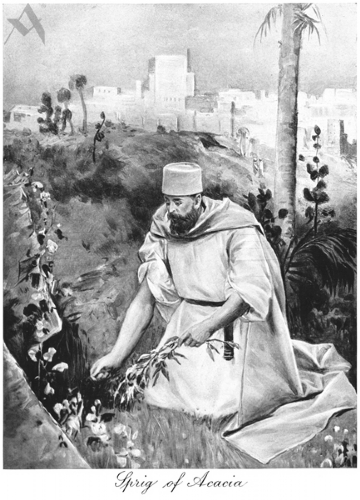
When we lower a Brother into the earth we cast a sprig of acacia upon the casket. The acacia is an evergreen. It is the oldest thing we say without saying it: that something does not die when the body does, that there is a part of a man the grave does not get to keep. We are taught that the soul is that house not made with hands, eternal in the heavens. I have stood at gravesides and recited those words over men I loved. I believed them on their behalf. I am only now being made to believe them on my own.
And there is the Level. Of all our working tools it is the one I keep returning to in the dark. We are taught that we meet upon the Level and part upon the Square — that whatever a man’s station, the grave receives us all as equals, that the prince and the laborer lie down in the same dust. I used to hear that as a lesson about humility. I hear it differently now. The Level does not only mean we are equal in death. It means I am not standing on higher ground than the men who went before me. We are on the Level still — they have only gone ahead to a labor I have not yet been called to. My living is not a verdict that I was worth more. The Level forbids that reading. It was not a contest, and I did not win it, and they did not lose.
So what is left for the one who lives?
The guilt, I have decided, is not a sin to be confessed away. It is the shape love takes when it has nowhere left to go — when the man you would have carried out of the fire is past carrying, and all that strength has no door to walk through. You feel it as guilt because it cannot reach them. But it can still reach the work.
In Lodge there are empty chairs now. I am the Secretary; I am the one who keeps the rolls, who writes down who was present and who was not, who records the passing of a Brother in the minutes in plain ink. It falls to me, of all men, to be the keeper of the names. I have decided that this is not a clerical accident. The dead asked nothing of me except to be remembered and to have their labor continued. They did not ask me to stop living in their honor. No firefighter ever wanted his brother to lay down his tools at the grave. The whole of our oath is the opposite — that the work goes on, that the rough ashlar keeps getting cut, that someone keeps the temple rising after the builder falls.
So I will take up the working tools again, with one lung and a debt I can never repay and have decided instead to pay forward. I will sit in the South, East, and the West for men who can no longer sit anywhere. I will write their names in clean ink. And when at last my own sand runs out — later now than I feared, but it will run — I hope a younger Brother casts a sprig of acacia for me and means it, the way I have meant it, every time.
I heard the words a stranger hears every fifteen seconds. I am still here to write the next sentence. That is not a thing to be forgiven. It is a thing to be answered.
So mote it be.